
For a child diagnosed with cancer, the immediate goal is clear: treat the disease and give the child the best possible chance of cure.
But childhood cancer care has another important consideration:
What happens after treatment?
A child who completes cancer treatment may have decades of life ahead. They will grow, learn, go to school, build relationships, pursue a career and experience life beyond cancer. This makes the long-term effects of cancer treatment particularly important.
As survival improves, paediatric oncology is increasingly focused not only on controlling the cancer, but also on reducing the potential impact of treatment on healthy developing tissues.
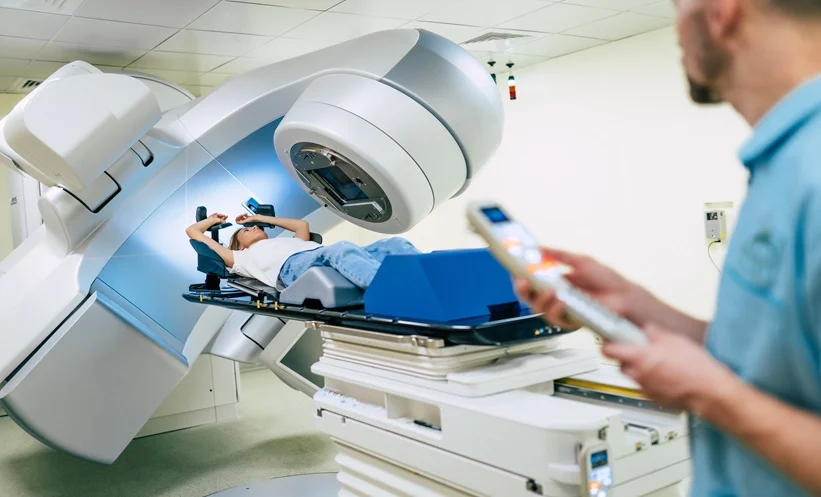
For children who require radiation therapy, proton therapy is one approach that may help achieve this balance in appropriately selected patients.
Why is radiation therapy different in children?
Radiation therapy is an important part of treatment for several childhood cancers, including certain brain, spinal, head and neck, and other solid tumours.
However, children are still growing and developing. Their normal tissues can be more sensitive to radiation, and they have a longer lifetime in which treatment-related effects may become apparent.
Depending on the tumour and treatment field, radiation exposure to healthy tissues can contribute to late effects involving growth, endocrine function, hearing, vision, cognition, cardiovascular health and other organ systems. The risk varies considerably according to the child’s age, tumour location, radiation dose and the tissues exposed.
This does not mean radiation therapy should be avoided when it is needed.
Rather, it highlights an important principle in paediatric oncology:
When effective cancer treatment can be delivered while reducing unnecessary radiation exposure to healthy tissues, that may matter for the years that follow.
Where does proton therapy fit?
Proton therapy is a form of radiation therapy that uses protons instead of conventional photon beams.
One of its key physical characteristics is the Bragg peak. Protons can deposit their radiation dose within the target at a defined depth, with a rapid reduction in dose beyond the target.
This can reduce the amount of radiation received by some surrounding healthy tissues compared with appropriately planned photon therapy.
For children, this potential reduction in unnecessary radiation exposure can be particularly relevant because developing organs may remain vulnerable to treatment effects for many years.
However, it is important to distinguish between a dosimetric advantage and a proven clinical outcome.
A lower radiation dose to a particular organ does not automatically mean that every patient will experience fewer long-term complications. The potential benefit of proton therapy therefore needs to be considered alongside tumour control, anatomy, treatment objectives and the individual child’s treatment plan.
What does the newer evidence tell us?
The evidence surrounding paediatric proton therapy continues to develop, particularly in childhood brain tumours and other cancers where reducing radiation exposure to healthy tissue may be important.
Newer evidence in paediatric brain tumours
A recent systematic review of proton therapy outcomes in paediatric central nervous system tumours examined outcomes across multiple tumour types and reported encouraging long-term disease-control and survival data. It also highlighted the continued occurrence of late effects such as endocrinopathies, hearing loss, vasculopathy and neurocognitive decline, although the frequency varied substantially by tumour type and treatment characteristics.
This is an important point: proton therapy does not eliminate late effects. Children treated with radiation still require long-term surveillance, particularly when critical structures or developing organs are included in the treatment field.
Long-term outcomes in childhood rhabdomyosarcoma
Endocrine health is particularly important in children treated for brain tumours because radiation can affect structures involved in hormonal regulation and growth.
Recent comparative evidence in children with medulloblastoma has suggested that proton craniospinal irradiation may reduce exposure to structures associated with endocrine complications, although available studies remain largely retrospective and have limitations in sample size and follow-up.
This is a useful reminder that the evidence needs to be interpreted carefully. Proton therapy may reduce dose to selected organs, but the clinical impact of that reduction can depend on many factors.
What could this mean for India?
The conversation around paediatric proton therapy is also becoming increasingly relevant in India.
India is not simply watching the global development of particle therapy. Weembrace has been appointed the exclusive importer, commercialisation and distribution partner for TecAustron in India, with the aim of bringing advanced particle-therapy systems to Indian healthcare institutions.
TecAustron’s portfolio includes proton therapy systems as well as multi-ion technology designed for proton, carbon and helium ion therapy. The collaboration is focused not only on introducing the technology, but also on supporting implementation, technical coordination, application expertise and the development of the infrastructure required for advanced particle therapy in India.
For paediatric oncology, this development is particularly relevant.
As access to advanced particle therapy expands, the question will not simply be whether the technology is available. It will be which children may benefit from it, for which tumour types and treatment plans, and whether reducing radiation exposure to healthy developing tissues translates into meaningful long-term benefits.
That makes evidence, appropriate patient selection and long-term follow-up just as important as the technology itself.
Why does long-term follow-up matter?
One of the strongest reasons for studying proton therapy in children is the length of survivorship.
A Japanese national survey followed paediatric patients for at least five years after proton therapy, with a median follow-up of more than eight years and follow-up extending beyond 30 years in some patients. Late toxicities continued to be observed over time, reinforcing the need for long-term surveillance.
More recent reviews similarly emphasise that many of the available paediatric proton studies remain retrospective, involve relatively small patient populations and have varying lengths of follow-up. Larger prospective studies and longer-term comparative data are still needed.
That does not make the technology unimportant. It means that the question is more nuanced than simply asking whether protons are “better” than photons.
The more useful question is:
For which children, and for which treatment plans, could reducing radiation exposure to healthy tissue provide a meaningful long-term benefit?
Why this matters beyond the treatment room
For a child undergoing cancer treatment, success is understandably measured first by whether the cancer is controlled.
But for families, the longer-term questions matter too.
Will the child be able to return to school?
Will growth and development be affected?
Could treatment influence hormonal function, hearing, cognition or other aspects of health later in life?
These questions are particularly relevant because childhood cancer survivors may live for many decades after treatment.
This is why treatment planning in paediatric oncology increasingly considers not only the tumour, but also the healthy tissues surrounding it and the potential consequences of radiation exposure over a lifetime.
Is proton therapy right for every child?
No.
Proton therapy is not automatically the preferred treatment for every paediatric cancer. Its potential benefit depends on factors such as:
- Tumour type and location
- Child’s age and stage of development
- Treatment intent
- Target volume
- Organs at risk
- Expected dose distribution with proton versus photon therapy
- Availability of appropriate treatment and expertise
For some patients, the dosimetric difference may be small. For others, reducing radiation exposure to specific healthy tissues may be clinically meaningful.
The decision should therefore be individualised and made by the multidisciplinary oncology team based on the child’s specific clinical and treatment-planning needs.
Looking beyond the treatment plan
Childhood cancer care does not end when the last treatment is delivered.
Long-term follow-up remains an essential part of survivorship, including monitoring for late effects and supporting physical, cognitive, emotional and social development.
As paediatric oncology continues to advance, the definition of successful treatment is also becoming broader.
It is not simply about helping a child survive cancer.
It is about helping that child grow, learn, develop and live well after cancer treatment.
For selected children who require radiation therapy, proton therapy represents one approach that may help reduce radiation exposure to healthy tissues while maintaining effective treatment of the tumour. Continued research and long-term follow-up will help clarify where its benefits are greatest and which patients are most likely to benefit.
Because in childhood cancer, the treatment goal is not only to protect the present. It is also to protect the years ahead.
Exploring Particle Therapy in Childhood Cancer
At weembrace, we believe that advancing cancer care also means understanding how evolving technologies may contribute to more precise and personalised treatment.
Through our partnership with TecAustron, we are working to bring advanced particle-therapy infrastructure to India, including proton and multi-ion technologies spanning proton, carbon and helium ions.
Our focus is not only on bringing the technology to India, but on supporting its responsible adoption through clinical, technical and institutional collaboration.
If you are a healthcare professional looking to understand more about particle therapy, proton therapy or its potential role in paediatric and other complex cancers, connect with the weembrace team to explore the available evidence and clinical applications.